
50632Firma të mbledhura deri sot


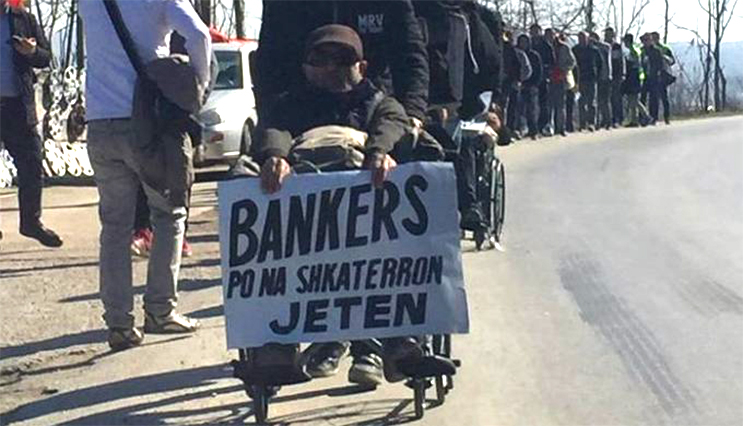
1. Nationalization of natural resources
- The natural resources of Albania are the property of every Albanian and should be treated as such.
- Concession contracts that have been signed as a result of corruptive practices, or where the terms of the contract have not been respected, must be abolished.
- A public company must be established for the management of natural resources. The profits generated from it should be distributed annually to every Albanian citizen.
- The infrastructure constructed through public funds should be managed by public entities and be free of charge for the citizens.

2. Revitalizing the economy
- The Antitrust Agency should be strengthened and set free from direct control of the ruling majority, ensuring the empowerment of this institution to act against oligopolies and monopolies that stifle market competition.
- Concessions that exceed the 4-year term of the ruling majority will need to gain approval through a referendum.
- Public works should only be carried out through the public budget or public debt. The current practice of publicly funding the so-called “public-private partnerships” should cease and it should be prevented from ever happening in the future.
- The establishment of “EcoThurje” in various sectors such as housing construction or agriculture should be incentivized by providing fiscal facilities and subsidies by public funds.
- A social scheme needs to be established to ensure that the most vulnerable groups benefit from the economic use of public space in cities. One such example might be the use of kiosks built by the municipalities by people who live in dire straits due to their disadvantaged backgrounds or disabilities.
- The fiscal burden of small businesses and start-ups should be eased by facilitating their position vis-à-vis large corporations, thus enabling their gradual empowerment.
- The government should limit tax evasion schemes widely used by large companies which currently hold a dominating position in the market, and increase taxes and tariffs on them.
- The government should increase economic aid funds, and bring them closer to the minimum wage set by law. This would empower workers and strengthen their bargaining power vis-a-vis their employers, limiting the current exploitation and harsh conditions that they have to work through.

3. Empowerment of the people
- A new law on referendums should be drafted, to guarantee and facilitate the constitutional right of the people to exercise their sovereignty directly in cases which they deem necessary.
- All current anti-constitutional referendum barriers have to be removed and they (the referendums) should be held along with local or central elections if their timing is appropriate.
- The Constitution should outline the issues on which a referendum is mandatory, for instance, city urban plans.
- The Constitution should state that amendments to it can be approved only through a national referendum.
- A new law should be drafted to provide citizens with the constitutional right of proposing new laws and/or amendment to the existing one.
- The petition should be institutionalized as a way to influence the agenda of parliamentary work. (eg. Creating a Petitions Register on the Parliament’s website where voters can sign up for online petitions).
- National and local citizens’ assemblies, an additional legislative body, which are called in case of political crisis, should be institutionalized in cases when the Parliament or the municipal councils are acting against the interest of the people.
- Quotas should be created in the Municipal Councils where every voter has the opportunity to take participate directly in the decision-making process without having to rely on the mediation of their representatives.
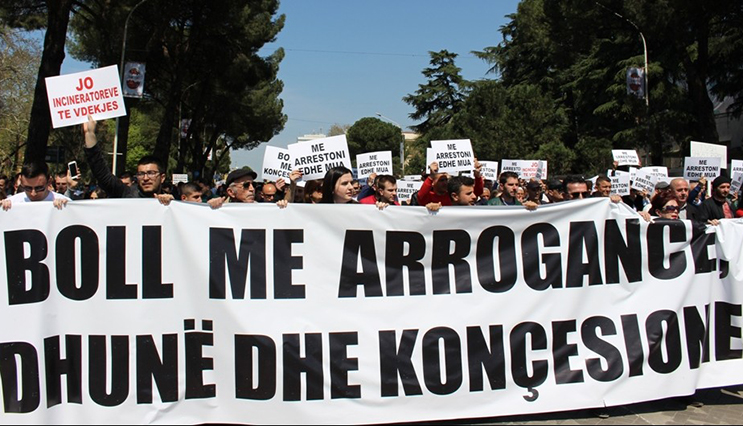
4. Decentralization of power, strengthening of check-and-balance mechanisms, and empowering constitutional control
- The president should be elected directly by the people through national election. He should have under his jurisdiction the key independent institutions of the country:
- Antitrust Agency
- State Supreme Audit
- High Inspectorate for the Declaration and Audit of Assets and Conflict of Interest
- The Ombudsman
- The Commissioner for the Right to Information and Protection of Personal Data
- The Commissioner for Protection from Discrimination
- The State Intelligence Service.
- The mandate of the President should be extended to six years in order to be non-symmetric with the mandate of the Parliament and the Government.
- The political mandate should be subject to democratic control even in the period between elections. For this purpose, the motion of non-confidence for the government initiated by voters should be institutionalized, in order to keep the Government in line with the will of the people.
- The powers of the President to check laws passed by the Parliament and decisions of the government should be strengthened in the Constitution, guaranteeing the creation of a control mechanism over the decision-making of the parliamentary majority. (For example, laws that are returned by the President must be passed only by a qualified majority in Parliament).
- Local governments should be financially empowered, controlling a larger share of their budget.
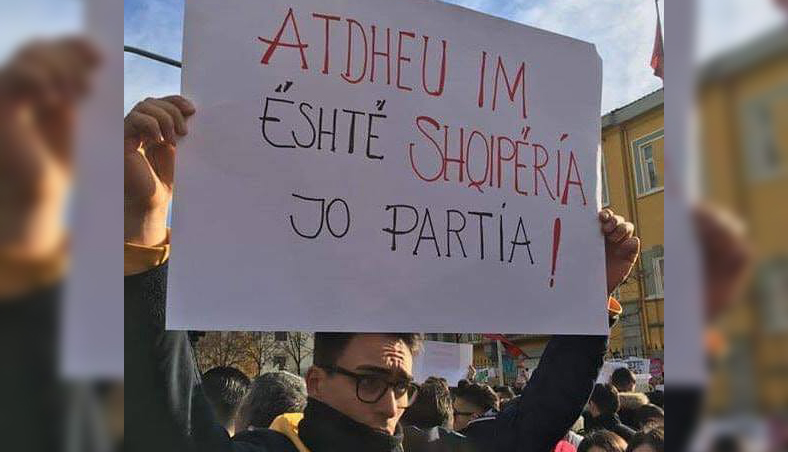
5. The democratization of political parties
- Political parties need to be managed democratically, as their internal behaviour reflects the way they eventually govern the country.
- Political parties should be forced to hold primaries prior to local and national elections. Primaries should be open to the public and administered by the Central Election Commission (CEC).
- Political Parties that do not hold primaries should not be allowed by the CEC to register in the national elections.
- The right of the party chairperson to be elected should be limited to two terms, as a measure to prevent the empowerment of autocratic leaders.
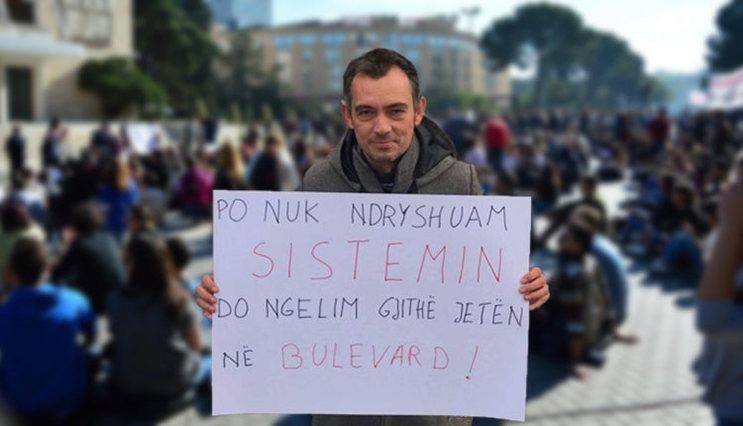
6. Guaranteeing free and fair elections
- The Electoral Code should be drafted by a national assembly and approved by a national referendum
- The most appropriate model to keep elections fair and free from manipulation of the will of the people is through a national proportional electoral system with open lists.
- Fair and equal conditions for independent individuals and civic groups competing outside traditional political parties should be created.
- Conditions should be created to enable the voting of Albanians wherever they are, whether inside or outside Albania. Some measures may be electronic voting, voting through mail and creation of polling stations within Albanian embassies in foreign countries.
- Anyone involved in election administration bodies should be excluded for four years from the right to work in the public administration.
- A “Protected time” of two years (one year before and one after the elections) should be established, during which public institutions cannot employ or sack more than 2% of all their workforce.
- Any financial liability resulting from court decisions for cases of civil servants unlawfully dismissed within this term shall be paid by the personal funds of the official who has signed the dismissal.
- The main media stakeholders and their families should be prohibited by law from participating in public procurements.
- An upper limit for spending on the electoral campaign should be set.
Obscure election funds should be considered as a severe criminal offence. As a result, parties that are proven to have benefited from funds of the organized crime or terrorist organisations should be dissolved and barred from ever participating in elections.
7. Reviving the jury duty tradition
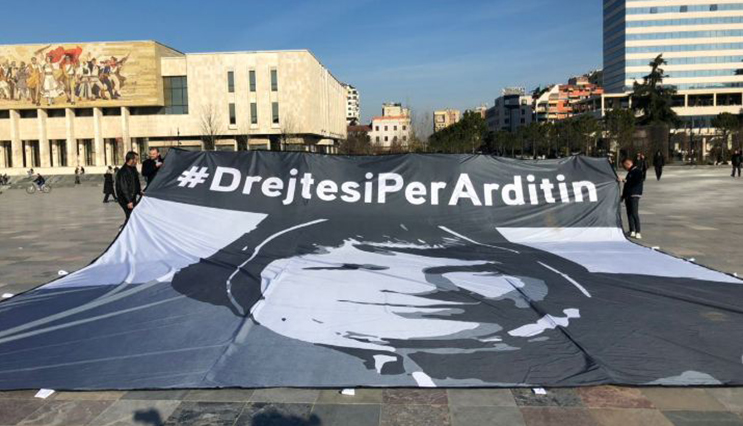
- A Jury in the judiciary system, in which random citizens are summoned should be established in the Criminal Court for Severe Crimes.
- All matters pertaining to corrupt officials, including members of the judiciary, should be decided by a public jury.
- Any matter pertaining to commercial entities that contaminate water, land, air or directly food should be the competence of the Criminal Court for Severe Crimes and must be tried by a jury.
- All assets confiscated as a consequence of the Justice Reform should go towards the establishment of an education fund for marginalized groups.
- The institution of the Private Prosecution should be strengthened, guaranteeing that the injured plaintiff is offered all the necessary support to criminally prosecute the perpetrator.
8. The unity of the Albanian people
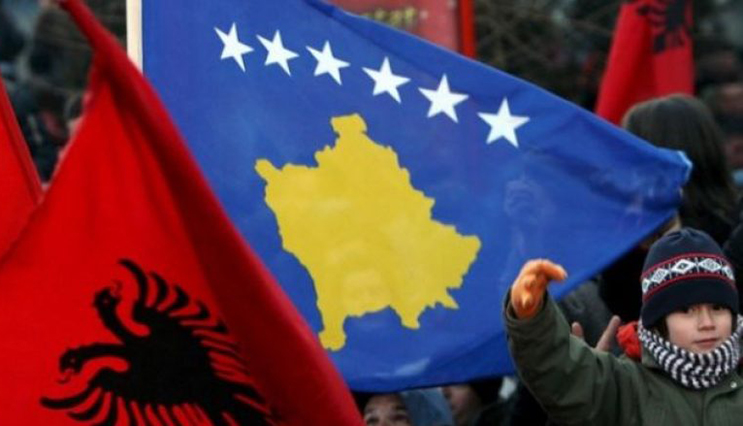
- A grand strategy for the Albanian people should be prepared and agreed with the Albanian people at home and Albanian communities abroad. That strategy should define the interest of the Albanian people in the long run and therefore set the red-lines for every Albanian political party be that within or outside of Albania.
- A common market with Kosovo should be established. This might include removing tariff and non-tariff barriers for products imported from Kosovo.
- A customs union between Albania and Kosovo should be created.
- The border points between the two countries have to be removed, allowing the free movement of people and goods.
- A railway from Gjirokaster to Mitrovica should be built with co-financing.
- The educational systems of the two countries should be harmonised by enabling automatic recognition of diplomas obtained in both countries.
- An online collaboration platform should be established where The Albanian Diaspora can contribute. This collaboration can consist of:
- Education, through which Albanian academics in the world can assist in research and teaching in Albanian universities.
- Policy makers, through which Albanian experts working for international institutions can offer consultancy to Albanian institutions in drafting better and more effective public policies.
European Integration, through Albanians who have European citizenship lobby and vote for the parties that support the integration of Albania into the EU.